In today's rapidly evolving digital landscape, the rise of mobile technology has brought unprecedented convenience and connectivity. However, this progress has also paved the way for increasingly sophisticated scams that exploit both technology and human psychology. Recent statistics reveal a concerning trend: 47% of Indian adults have encountered or know someone who has faced AI voice scams, nearly double the global average of 25%.
The alarming figure underscores the pervasive nature of these scams and the urgent need for awareness and education. Also, The financial impact of these scams is staggering, with 83% of Indian victims reporting monetary losses. Alarmingly, 48% of these victims lost more than ₹50,000. As scams become more sophisticated, it's crucial to understand the tactics used by fraudsters and how to protect yourself.
This blog will explore common mobile scams, their social engineering techniques, and ways to safeguard against these threats. By staying informed and vigilant, you can navigate the digital world with confidence and security.
Call Forwarding Scam
The Call Forwarding Scam involves fraudsters posing as customer service representatives from mobile or internet service providers. They instruct you to dial a specific code, typically starting with 401, which redirects your calls and messages to the scammer's number.
Social Engineering Techniques
Scammers exploit your trust by impersonating legitimate service reps. They use convincing language and urgency to make you comply with their instructions without questioning their authenticity.
- Impact: By redirecting your calls and messages, scammers can intercept sensitive information, such as banking details and OTPs, leading to identity theft and financial loss. The breach of privacy and potential financial impact can be significant.
- Safeguarding: Always verify the identity of callers by contacting your service provider directly. Avoid following unsolicited instructions over the phone.
FedEx Courier Scam
In this scam, fraudsters impersonate FedEx employees and law enforcement officials. They employ Interactive Voice Response (IVR) systems to simulate calls from FedEx and fake customs and police officials, creating a sense of urgency and fear.
Social Engineering Techniques
Scammers use psychological manipulation and fear tactics, informing you of a supposed illegal item in a package and threatening legal action. This intimidation is designed to coerce you into paying a hefty "fine" to avoid trouble.
- Impact: Victims are often intimidated into paying large sums of money under false pretenses. The stress and financial loss can be considerable, affecting your sense of security and trust.
- Safeguarding: Verify any suspicious calls with official FedEx contacts. Do not share personal information or make payments based on unsolicited calls. Protectt.ai can help identify fraudulent calls and messages, providing an additional layer of security.
Smishing – Electricity Bill SMS Fraud
Smishing involves sending fake SMS messages that appear to be from official electricity departments. These messages threaten power disconnection due to unpaid bills, tricking you into clicking on phishing links.
Social Engineering Techniques:
Scammers pose as official electric executives, using urgency and fear of disconnection to prompt you to act quickly without verifying the message's authenticity.
- Impact: Clicking on phishing links can lead to unauthorized transactions and data theft, compromising your financial security and personal information.
- Safeguarding: Always verify messages with official sources and avoid clicking on suspicious links. Use Protectt.ai to detect and block phishing attempts, ensuring your credentials remain secure.
New Credit Card Scam
In a new credit card scam, fraudsters impersonate bank officials, offering a new credit card and a free Android phone. The phone comes with pre-installed spying apps that access your credit card information.
Social Engineering Techniques:
Scammers lure you with attractive offers and impersonate bank executives, gaining your trust to exploit your personal information.
- Impact: Unauthorized access to credit card information can lead to significant financial loss and compromised personal data, affecting your credit score and financial stability.
- Safeguarding: Verify offers directly with banks and avoid accepting unsolicited devices. Protectt.ai can help identify and block malicious apps and transactions, safeguarding your financial information.
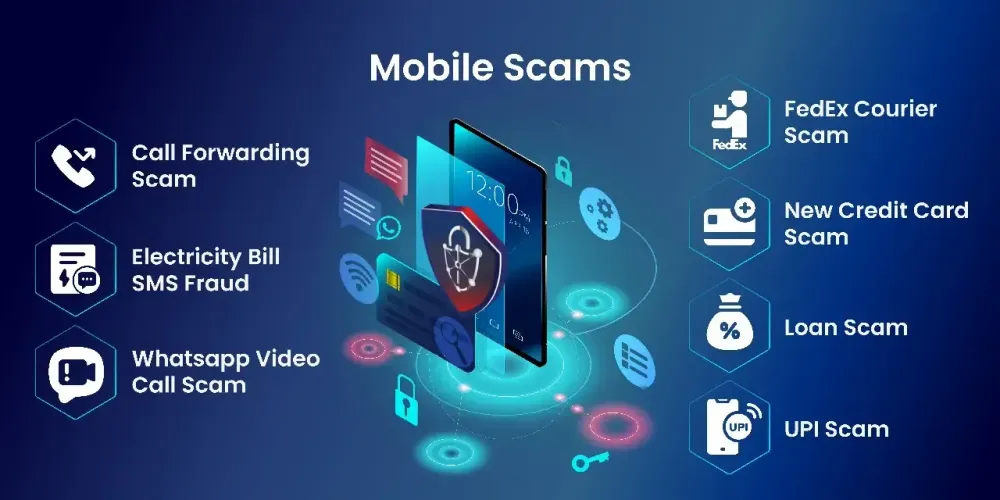
WhatsApp Video Call Scam
This scam involves fraudsters using WhatsApp video calls to capture or manipulate footage of the victim. The scammers then threaten to share the manipulated content unless a ransom is paid.
Social Engineering Techniques:
Scammers exploit the trust and familiarity of WhatsApp to initiate video calls. They use fear and embarrassment as leverage, convincing victims that the manipulated footage could harm their reputation if released.
- Impact: Victims face blackmail and financial extortion. The emotional distress and potential damage to personal and professional relationships can be significant.
- Safeguarding: Be cautious with video calls from unknown numbers. Avoid sharing personal information or engaging in compromising situations during video calls. Use privacy settings to control who can contact you on WhatsApp.
Loan App Scam
Fraudulent loan apps claim you have missed payments, accessing your personal data and using it for coercion. These apps often have hidden terms that exploit users financially.
Social Engineering Techniques:
Scammers lure victims with attractive loan offers, exploiting the need for quick financial solutions. They use urgency and false promises to convince victims to download and use their apps.
- Impact: Victims face high-interest rates, data misuse, and coercion. The financial strain and breach of personal data can lead to long-term consequences.
- Safeguarding: Verify loan offers with reputable financial institutions. Avoid downloading apps from unknown sources. Use security tools like Protectt.ai to identify and block fraudulent apps.
UPI Scam
In this scam, fraudsters impersonate bank executives, requesting KYC updates via screen sharing apps. This allows them to remotely control your device and conduct unauthorized UPI transactions.
Social Engineering Techniques:
Scammers use authority and urgency to gain trust, convincing victims to share sensitive information under the guise of compliance with banking regulations.
- Impact: Financial loss and unauthorized access to your bank account. The breach of financial security can lead to significant monetary damage.
- Safeguarding: Avoid installing unknown apps and sharing credentials over calls. Verify any requests for KYC updates directly with your bank. Use tools like Protectt.ai to secure your device and transactions.
By understanding these scams and employing protective measures, you can navigate the digital landscape with greater confidence and security.
Conclusion
In an era where digital interactions are integral to daily life, understanding and mitigating mobile scams is crucial. These scams, ranging from call forwarding to fake courier alerts, exploit vulnerabilities in both technology and human behavior. By staying informed and vigilant, you can protect yourself from financial loss and personal data breaches. Empower yourself with knowledge and proactive measures to navigate the digital world safely and confidently.
To know more and have a detailed demo, please get in touch with us on sales@protectt.ai
Protectt.ai is ‘A Leader in Mobile App Security in India.’ Built India’s first SaaS-based, Innovative Mobile App Security platform with Runtime Application Self Protection capabilities. Protectt.ai is delivering the next generation Mobile App, Device & Transaction Security Platform with 50+ Mobile App Security features driven by Deep Tech.