Pooja (name changed), a young professional who recently started investing in stocks through a mobile trading app. One day, she receives a call from someone claiming to be a representative from her trading platform, informing her of suspicious activity on her account. Panicked, she follows their instructions to "secure" her account, unknowingly giving away her login credentials. Within minutes, her account is drained, and unauthorized trades are made. Pooja is a victim of a common mobile app scam, a scenario that is becoming increasingly prevalent.
This blog aims to raise consumer awareness about common fraud scenarios related to Stock trading Mobile app, the social engineering techniques employed by fraudsters, and how to build resilience against such attacks. Also, we'll explore how Mobile Runtime Application Self-Protection (RASP) can enhance mobile app security, particularly in stock trading apps, API endpoints, and against clickjacking threats.
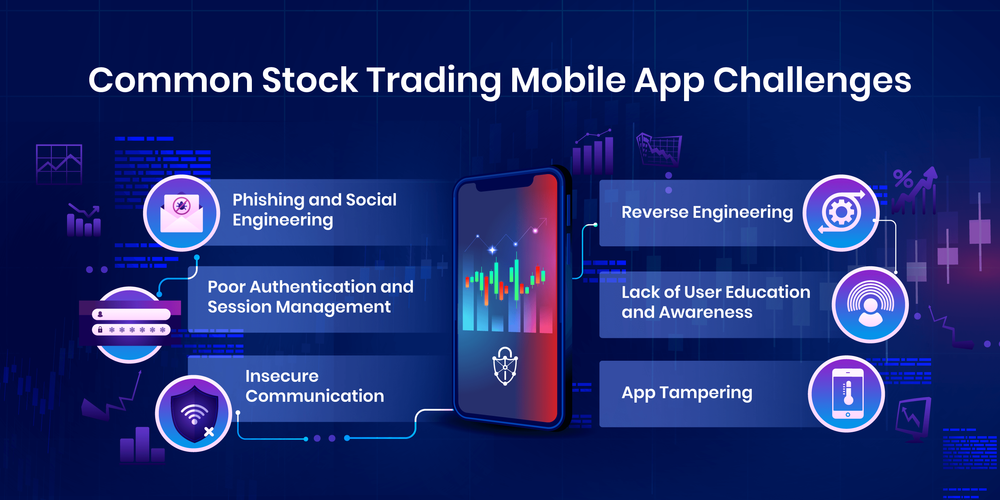
Common Stock trading Mobile app Challenges: An Overview
Pooja's experience highlights several common vulnerabilities and security threats associated with mobile stock trading apps:
- Phishing and Social Engineering: The scenario where Pooja received a call from someone pretending to be a representative of her trading platform is a classic example of phishing. Attackers often use social engineering tactics to trick users into divulging sensitive information, such as login credentials. This type of attack exploits human psychology rather than technical vulnerabilities, making it a prevalent threat in mobile app security.
- Poor Authentication and Session Management: Pooja's situation underscores the importance of robust authentication mechanisms. If the app had stronger authentication features, such Zero Trust approach as Device & Sim Binding Solution, it could have prevented unauthorized access even if her credentials were compromised.
- Insecure Communication: If the app does not properly secure its communication channels, fraudsters can intercept data during transmission. This makes it easier for them to gather information that can be used in social engineering attacks like the one Pooja experienced.
- Reverse Engineering and App Tampering: Fraudster attempts to get access to sensitive information, such as login credentials, in an insecure manner can lead to unauthorized access. If Pooja's app stored her credentials in plaintext or without adequate encryption, it would be easier for attackers to exploit them.
- Lack of User Education and Awareness: Pooja's case also highlights the need for better user education. Users should be informed about common scams and security practices, such as verifying the identity of callers and not sharing sensitive information over the phone.
Secure Stock Trading Mobile Apps with RASP Security
From a mobile application security perspective, Pooja's experience with her mobile stock trading app can be linked to several technical vulnerabilities and threats that are prevalent in such applications:
- Reverse Engineering: Mobile stock trading apps can be vulnerable to reverse engineering, where attackers decompile the app to understand its underlying code and logic. This can expose sensitive information such as API keys or cryptographic constants, which can be exploited to gain unauthorized access or manipulate transactions.
- App Tampering: Attackers may modify legitimate apps to create malicious versions that appear identical to the original. These tampered apps can be distributed through unofficial channels, tricking users into installing them. Once installed, they can capture user credentials or perform unauthorized actions, similar to how Pooja was deceived.
- Jailbroken/Rooted Devices: Mobile apps running on jailbroken or rooted devices are at higher risk because these devices bypass operating system security restrictions. This allows malicious apps to gain elevated privileges, potentially intercepting sensitive data or altering app behavior without detection.
- Insecure Communication: Many apps fail to implement secure communication protocols, such as SSL/TLS with proper certificate pinning. This oversight can lead to man-in-the-middle (MitM) attacks, where attackers intercept and manipulate data in transit, potentially leading to unauthorized transactions or data breaches.
- Proxy Networks: Malicious software can use devices as nodes within a proxy network , obscuring the origin of attacks and making it difficult to trace fraudulent activities. This can facilitate phishing attacks or unauthorized access, as experienced by Pooja.
Stock trading apps are lucrative targets for fraudsters. Common fraud scenarios include unauthorized trades, phishing attacks, and API exploits. Mobile Runtime Application Self-Protection (RASP) can significantly bolster the security of these apps.
SEBI has introduced Cybersecurity and Cyber Resilience Framework (CSCRF) SEBI/HO/ ITD-1/ITD_CSC_EXT/P/CIR/2024/113 dated August 20, 2024 to bolster cybersecurity and resilience among regulated entities (Stock trading companies, MF, AMC, Securities etc) through a standards-based approach, ensuring robust protection against evolving cyber threats.
Conclusion
Mobile stock trading apps are attractive targets for fraudsters due to the sensitive financial data they handle. Vulnerabilities such as reverse engineering, app tampering, insecure communication, and exposure on jailbroken/rooted devices can lead to significant financial losses and compromise user trust. Ensuring the security of these apps is essential not only to protect individual users but also to maintain the integrity of the financial markets.
To know more and have a detailed demo, please get in touch with us on sales@protectt.ai
Protectt.ai is ‘A Leader in Mobile App Security in India.’ Built India’s first SaaS-based, Innovative Mobile App Security platform with Runtime Application Self Protectionacapabilities. Protectt.ai is delivering the next generation Mobile App, Device & Transaction Security Platform with 50+ Mobile App Security features driven by Deep Tech.
For more information, please visit: https://protectt.ai/
Official LinkedIn account: https://www.linkedin.com/company/protectt-ai-labs-pvt-ltd/