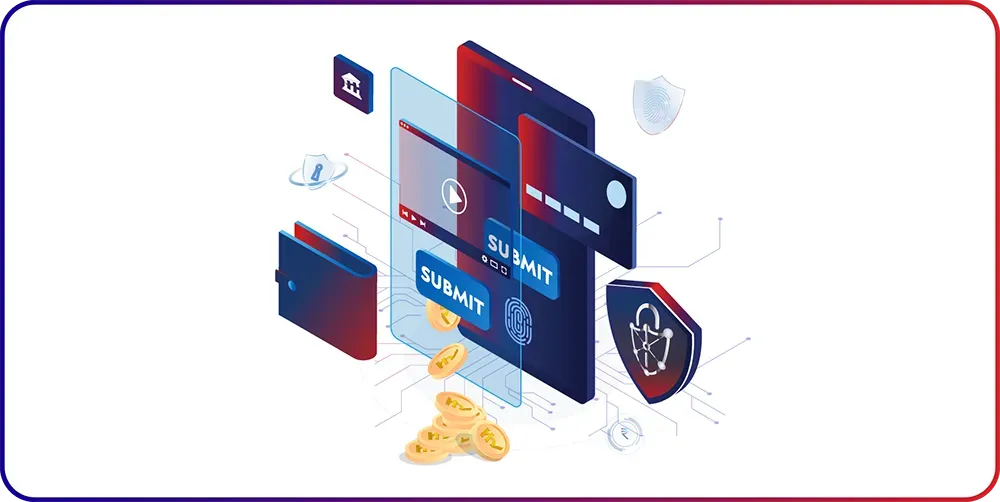
Clickjacking being a notable method employed by Fraudsters to manipulate users into unintended actions is not merely anecdotal; data shows that mobile threats, including clickjacking, have surged, with almost three times as many phishing and malicious links targeting mobile devices compared to the previous year.
What is Clickjacking?
Clickjacking involves overlaying a transparent or deceptive interface on top of a legitimate webpage or application interface. Users believe they are interacting with the visible content, but their actions are actually being directed to hidden elements. This can lead to unintended actions such as downloading malware, providing sensitive information, or executing unauthorized transactions.
For instance, older versions of mobile OS often lack robust permission management, allowing attackers to exploit these weaknesses to access sensitive features like cameras and GPS locations without the user's consent. This is particularly concerning given that many users interact with financial and personal data through their mobile apps, making them prime targets for malicious actors.
What is Clickjacking?
Clickjacking, also known as UI redressing, is a malicious technique used by attackers to trick users into clicking on something different from what they perceive, potentially revealing confidential information or allowing unauthorized actions. This attack exploits the user's trust and the application's interface, making it a significant threat in the realm of mobile app security.
In other words, the attacker creates a hidden layer that obscures the true nature of the action the user is about to perform.
How Clickjacking Works
Clickjacking attacks typically involve the use of iframes or other overlay techniques to conceal the true nature of the interface.For instance, a user might think they are clicking a button to access a legitimate feature of the app, but instead, they are unknowingly interacting with a hidden element that performs a malicious action, such as transferring funds or sharing personal information.
Types of Clickjacking Attacks
- Overlay-Based Attacks: These involve using transparent or opaque overlays to trick users into clicking on hidden elements. Techniques include:
- Complete Transparent Overlay: Loading a legitimate page within an invisible iframe.
- Cropping : Covering specific buttons or text with misleading content.
- Hidden Overlay : Using a 1x1 pixel iframe to capture clicks.
- Click Event Dropping : Allowing clicks to pass through to a hidden page.
- Non-Overlay Based Attacks : These do not rely on overlays but use other methods to deceive users, such as manipulating cursor positions or exploiting vulnerabilities in autofill features.
Impact of Clickjacking
Clickjacking can have severe consequences, including unauthorized actions, data theft, financial losses, reputation damage, and privacy violations. Attackers can trick users into approving malicious transactions, downloading malware, or sharing sensitive information, leading to significant security breaches.
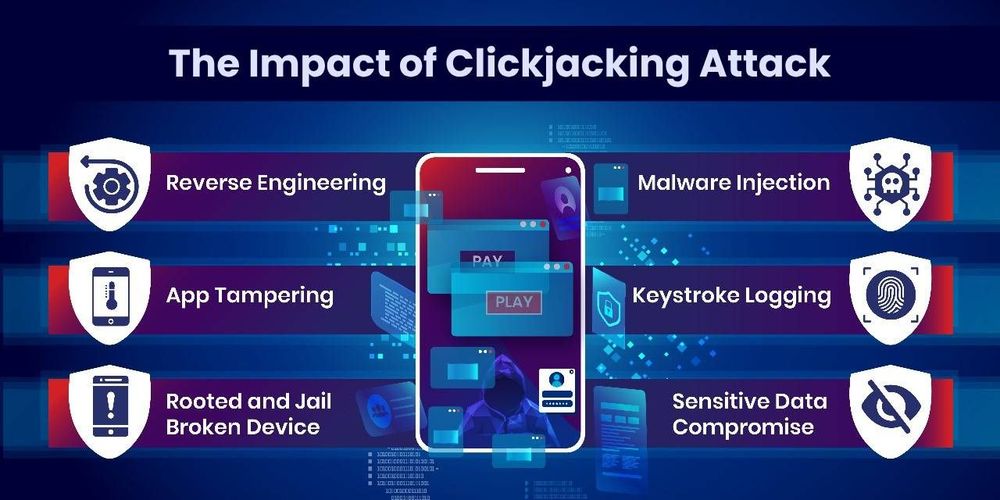
Preventing Clickjacking on Mobile Apps
To defend against clickjacking, developers can implement several security measures:
- Use the FLAG_SECURE Window Flag
Android provides a way to protect sensitive content from being captured or overlaid by other apps using the FLAG_SECURE window flag. By enabling this, the content of the app's window will not be shown in screenshots, previews, or overlays. To apply FLAG_SECURE in your activity, add the following in the onCreate() method of the activity: java This flag will block malicious overlays and prevent the app from being captured or recorded.
2. Secure Sensitive UI Components
Make sure that sensitive UI components, like permission dialogs, confirmation dialogs, or other high-stakes interactions, are protected from being clickjacked. Android automatically prevents overlays on system permission dialogs, but for custom dialogs or buttons, ensure that they aren't vulnerable.
For example, during a critical user flow, you could pause or dismiss any interactions if an overlay is detected, and show a message to the user about the potential risk.
3. JavaScript Frame-Breaker Scripts: These scripts prevent a page from being framed by redirecting the top-level window to the current page.
4. User Education: Educating users about the risks of clickjacking and encouraging them to be cautious when interacting with unfamiliar content.
Technical Mechanisms of RASP in Preventing Clickjacking
Protectt.ai leverages its Runtime Application Self-Protection (RASP) capabilities to effectively mitigate clickjacking threats on mobile applications. By embedding security directly within the app, Protectt.ai ensures that mobile applications are equipped to detect and respond to clickjacking attempts in real-time. Here’s how Protectt.ai’s RASP features address clickjacking:
Overlay Detection and Prevention: Protectt.ai’s RASP technology includes mechanisms to detect and prevent unauthorized overlays, which are a primary method used in clickjacking attacks. By monitoring for unexpected UI elements that could obscure or mimic legitimate app interfaces, RASP can block attempts to deceive users into interacting with malicious overlays.
Anti-Tampering Measures: The RASP solution incorporates anti-tampering measures to protect the app from being modified by malicious actors who may attempt to introduce clickjacking vulnerabilities. By securing the app’s code and runtime environment, RASP helps maintain the integrity and security of the application.
In-Depth Runtime Monitoring: RASP integrates deeply into the application’s runtime environment, continuously monitoring for anomalous behaviors. It scrutinizes user interactions for signs of clickjacking, such as unexpected iframe injections or UI overlays. By maintaining a real-time understanding of the app’s operational context, RASP can detect deviations from expected behavior patterns that may indicate clickjacking attempts.
Contextual Analysis and Anomaly Detection: Leveraging its embedded position, RASP performs contextual analysis of all user interactions. It assesses the legitimacy of clicks by examining the elements involved and the sequence of actions. This analysis helps differentiate between genuine user actions and those manipulated by malicious overlays, enabling the detection of clickjacking attempts with high precision.
Automated Mitigation Strategies: Upon identifying a potential clickjacking threat, RASP can trigger automated responses to neutralize the attack. These strategies may include:
- Session Termination: Immediately ending the current session to prevent further unauthorized actions.
- User Alerts: Displaying security warnings to inform users of suspicious activities.
- Functionality Lockdown: Temporarily disabling sensitive features to mitigate risk until the threat is resolved.
UI Integrity Enforcement: Protectt.ai’s RASP enforces strict UI integrity policies, preventing the app from being framed or overlaid by external elements. RASP enforces strict UI integrity policies to prevent unauthorized framing and overlaying of the application interface. By implementing measures such as frame-busting scripts and restricting the use of iframes, RASP ensures that the application’s UI remains isolated from external manipulations, a common vector for clickjacking attacks.
Cross-Platform Consistency: RASP solutions are designed to function consistently across various mobile platforms and strengthen Android app security and iOS app security. This cross-platform capability ensures that security measures are uniformly applied, providing comprehensive protection against clickjacking regardless of the device or operating system.
Security Policy Enforcement: RASP can enforce security policies that prevent the mobile application from executing unauthorized scripts or loading external resources that could facilitate clickjacking. By controlling the execution environment, RASP minimizes the attack surface available to adversaries.
By integrating the above-mentioned advanced RASP features, Protectt.ai provides a robust defense against clickjacking threats, enhancing the security of mobile applications and protecting users from deceptive and potentially harmful interactions. This proactive approach not only safeguards sensitive data but also helps maintain user trust and application integrity.
Conclusion:
Protecting mobile applications from sophisticated threats like clickjacking is more critical than ever. With Protectt.ai's advanced RASP security features, you can ensure that your mobile apps are fortified against deceptive attacks, safeguarding both your users and your data. By integrating these robust security measures, you not only enhance your app's security posture but also build trust with your users, providing them with a safe and secure experience.
Take action now to secure your mobile applications with Protectt.ai's cutting-edge RASP solutions. Contact us today to learn how we can help you defend against clickjacking and other emerging threats, ensuring the integrity and reliability of your mobile apps.
To know more and have a detailed demo, please get in touch with us on sales@protectt.ai
Protectt.ai is ‘A Leader in Mobile App Security in India.’ Built India’s first SaaS-based, Innovative Mobile App Security platform with Runtime Application Self Protection capabilities. Protectt.ai is delivering the next generation Mobile App, Device & Transaction Security Platform with 50+ Mobile App Security features driven by Deep Tech.