
Introduction
UAE banks, insurers, and government departments are deploying AI chatbots and copilots faster than most security teams can keep up. In 2023, 45% of UAE financial-sector respondents had deployed or improved AI in the prior year, with 34% incorporating generative AI directly into operations, according to Finastra's 2023 financial services survey.
Traditional cybersecurity testing was never built for this. Penetration testing checks firewalls and code paths. It doesn't catch a customer tricking a banking chatbot into leaking account data through a cleverly worded prompt—or an insurance bot steered into biased claims decisions.
This guide covers what LLM red teaming actually is, why UAE enterprises can't skip it, the vulnerabilities it uncovers, how the testing process works, and how to pick the right partner.
Key Takeaways
- LLM red teaming is adversarial testing that surfaces AI risks before attackers or regulators do
- UAE's PDPL and Central Bank guidance are pushing AI risk testing from "nice to have" to expected practice
- Prompt injection, data leakage, bias, and agentic tool misuse are the four risks that matter most
- Automated scanning plus human red teamers catches gaps either method misses alone
- A BFSI-focused partner with security credentials and UAE regulatory fit reduces compliance exposure
What Is LLM Red Teaming?
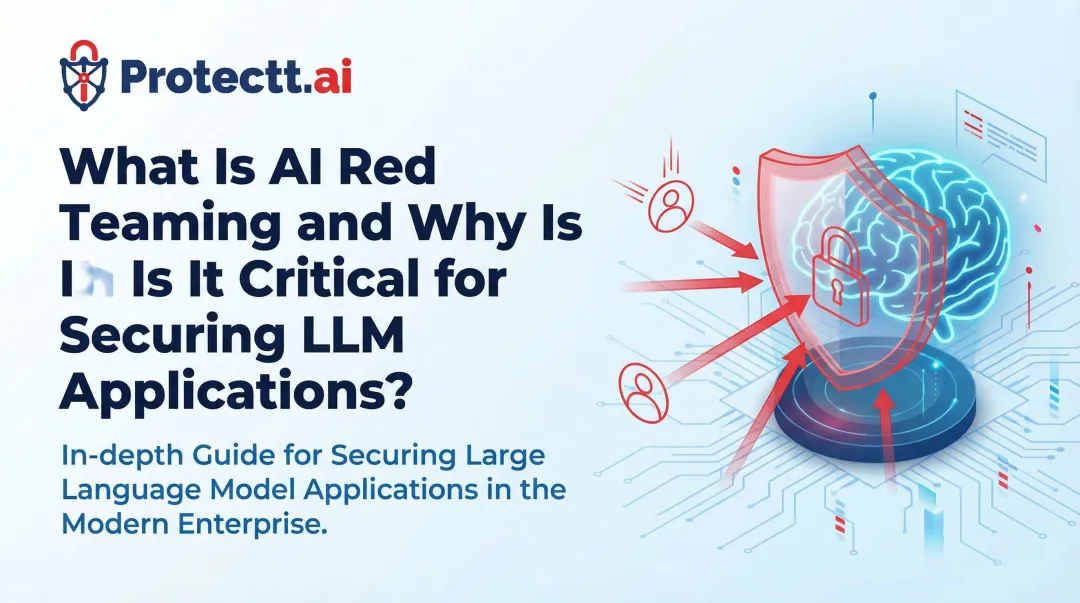
LLM red teaming is the systematic, adversarial probing of large language models to surface unsafe behaviours before real users or attackers ever see them.
NIST defines AI red teaming as structured testing for flaws and vulnerabilities, often run in a controlled setting alongside the people who built the system. NIST's AI red teaming glossary frames this as deliberate, not accidental, discovery.
There are two broad lanes:
- Security red teaming — prompt injection, data extraction, system-prompt leakage, model abuse
- Content red teaming — bias, harmful outputs, policy violations, misinformation
So what is LLM red teaming, in plain terms? It's deliberately trying to break an AI model's guardrails, the same way a bank stress-tests a vault before trusting it with cash. For example, a tester might feed a customer-service bot a multilingual, obfuscated instruction designed to extract another customer's account balance.
Unlike standard QA, LLM red teaming isn't pass/fail. Software either has a bug or doesn't. LLM outputs are probabilistic — the same prompt can produce different answers on different runs. Finding one successful jailbreak proves it's possible, and that's often enough to justify a fix.
Why UAE Enterprises Need LLM Red Teaming Services
UAE financial institutions, insurers, and government bodies are rolling out AI chatbots and copilots at a pace that's expanding their attack surface daily. The DFSA's June 2025 survey of 661 DIFC-authorised firms found AI use jumped to 52%, up from 33% a year earlier, with generative AI adoption up 166%.
Regulation is catching up fast:
- UAE PDPL requires fair, transparent processing and gives customers a right to object to automated decisions with adverse effects
- CBUAE guidance for licensed financial institutions requires at least annual bias testing, continuous monitoring, human oversight, and a clear ability to shut down an AI system
- DESC's Dubai AI Security Policy signals intent to set clear security standards for generative AI systems
What happens when it goes wrong? A biased claims-decisioning insurance bot or a chatbot tricked into approving fraudulent transactions creates business and compliance fallout, not only a technical bug report:
- Regulatory scrutiny under PDPL and CBUAE frameworks
- Reputational damage in a market where trust drives customer retention
- Potential financial losses from fraud enablement
Regional enterprises already operating under ISO 27001 and PCI DSS discipline are realising their AI systems need the same rigor. Protectt.ai applies certified security credentials (ISO 27001, PCI DSS) so BFSI and fintech teams can add AI risk assurance alongside the controls they already run.

Key LLM Vulnerabilities Red Teaming Uncovers
Red teaming surfaces failure modes that standard QA and safety evals miss. These four classes show up most often in production LLM systems.
Prompt Injection and Jailbreaking
Attackers craft or encode prompts to bypass safety guardrails. OWASP's 2025 taxonomy for LLM applications flags hidden, split, multilingual, and multimodal instructions as common bypass techniques in its Top 10 for LLM Applications. A jailbreak is a form of prompt injection that convinces a model to disregard its own safety rules.
Data Leakage and Information Extraction
LLMs can be manipulated into exposing sensitive customer or corporate data through adversarial queries. In 2023, Samsung engineers shared sensitive corporate data with ChatGPT on three separate occasions, according to Dark Reading's report. Samsung then banned workplace generative AI use to stop further leaks.
Bias, Misinformation, and Ethical Failures
Biased or harmful outputs create real compliance and reputational risk. Google's own account of its Gemini image-generation failure, where tuning issues caused inaccurate or offensive outputs, led the company to pause the feature entirely and commit to extensive retesting before relaunch.
Agentic and Tool-Misuse Risks
AI agents that autonomously call APIs or tools introduce a new risk category. AgentDojo, a benchmark with 97 tasks and 629 security test cases, found current LLM agents solved fewer than 66% of tasks without attack, and a secondary detector could cut attack success to 8%. That drop is exactly why agent workflows need adversarial testing before they touch production tools and data.

The LLM Red Teaming Process
A structured red teaming engagement typically runs through five stages:
- Scope definition: inventory the model, prompts, RAG stores, connectors, and tools; identify high-impact decision points
- Baseline adversarial testing: run known attack patterns from frameworks like OWASP's LLM taxonomy
- Enhanced, multi-turn attacks: layer in conversational, context-aware attacks that single-shot prompts miss
- Output evaluation: score attack success rate, leakage, bias disparity, and safe-failure behaviour
- Remediation feedback loop: document findings, fix, and retest
Automated scanning tools scale coverage across thousands of prompt variations. Human expert red teamers add cultural, linguistic, and regulatory judgement that automation can't replicate on its own. Neither alone is enough.
Red teaming isn't a pre-launch checkbox. CBUAE guidance expects continuous monitoring and independent challenge, meaning testing needs to repeat every time the model, prompts, or tools change.

Protectt.ai's AI Red Teaming capability pairs automated attack simulation with human-crafted scenarios based on real exploitation patterns. Testing covers all 10 OWASP LLM risk categories, including prompt injection, insecure output handling, and sensitive-information disclosure.
Choosing the Right LLM Red Teaming Partner in the UAE
Not every AI testing vendor understands regulated industries. When evaluating a partner, look for:
- Proven security certifications — ISO 27001 and PCI DSS, applied to AI workloads as well as mobile
- Financial-sector domain expertise — experience with banking, insurance, or government compliance requirements
- Multidisciplinary teams — technical testers plus regional, linguistic, and regulatory expertise
- Clear reporting and remediation support — not just a list of exploited prompts, but a path to fixing them
Generic AI testing vendors often lack context for regulated sectors. A bank's chatbot doesn't just need to resist jailbreaks; it needs to hold up against PDPL's human-review requirements and CBUAE's fairness-testing expectations.
Protectt.ai holds ISO 27001 and PCI DSS credentials and has a track record securing BFSI clients across mobile and application security. That mix of certified controls and regulated-industry experience matters when LLM risk sits inside the same compliance stack as the rest of your security programme.
For UAE enterprises, the right partner ties red-team findings to PDPL and CBUAE expectations and helps you remediate—not only produce a list of exploited prompts.
Conclusion
LLM red teaming is adversarial testing that finds the AI risk before an attacker or a regulator does. PDPL and CBUAE guidance have moved it from optional practice toward expected diligence on customer-facing financial systems, and the four failure modes that actually hurt in production stay consistent: prompt injection, data leakage, bias, and agentic tool misuse. Automation alone misses what a skilled human finds; humans alone cannot cover the scale.
Then the engagement ends. A strong report stays stranded unless its findings reach the runtime layer of the app the model sits behind.
Protectt.ai carries them across. Runtime monitoring and RASP defend the apps that host or call LLM features, blocking tampering and abuse locally rather than after a round trip, and threat telemetry keeps feeding remediation owners once the retest is signed off. The SDK fits a BFSI release train with no UX drag, and the platform is built for regulated mobile channels in the UAE rather than a model sandbox.
Feed your next red-team findings into a threat assessment with us, and keep the defence running after the engagement closes.
Frequently Asked Questions
What is LLM red teaming?
LLM red teaming is adversarial testing designed to uncover a model's vulnerabilities, such as jailbreaks, data leakage, or biased outputs, before real users or attackers exploit them. It's exploratory, not a simple pass/fail check.
Why is LLM red teaming important for regulated UAE industries?
The UAE's PDPL and CBUAE guidance increasingly expect documented AI risk testing, bias assessments, and human oversight. Skipping red teaming raises both regulatory exposure and reputational risk in customer-facing BFSI or government deployments.
How often should LLM red teaming be conducted?
Testing should be continuous, not a one-time pre-launch event. Retest whenever the model, prompts, connected tools, or underlying data sources change materially.
What is the difference between AI red teaming and traditional penetration testing?
Penetration testing targets deterministic infrastructure flaws like misconfigured servers. LLM red teaming targets probabilistic model behavior, meaning the same prompt can produce different outputs across runs.
Can automated tools fully replace human red teamers?
No. Automated tools scale coverage across many prompt variations. Human testers add cultural, linguistic, and contextual judgment that automation misses—especially in multilingual UAE deployments.
What industries in the UAE benefit most from LLM red teaming services?
Banking, insurance, fintech, and government sectors benefit most, since they deploy customer-facing AI systems handling sensitive data and consequential decisions under active regulatory scrutiny.